

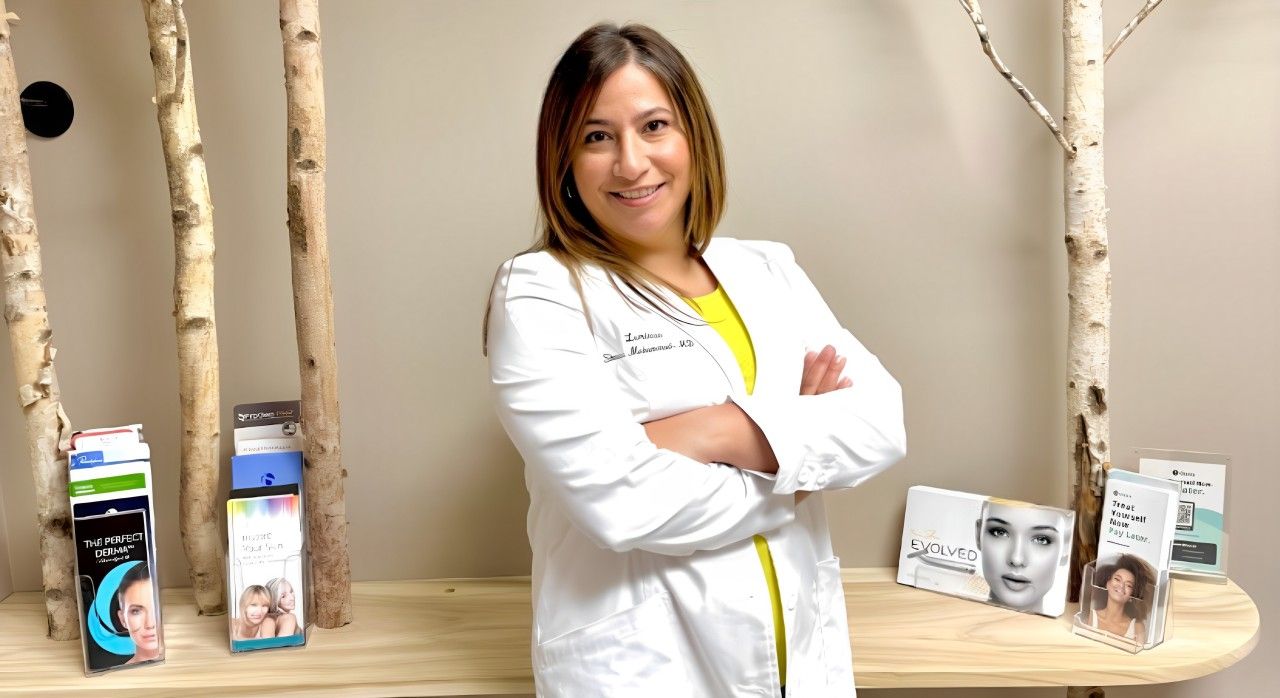
At Luminous Medical Aesthetics, board-certified radiologist Dr. Shaden utilizes ultrasound-guidance for all dermal filler dissolve treatments to minimize uncertainty and prioritize safety. By visualizing facial anatomy in real time, she can see exactly where filler is beneath the skin, allowing for precise, targeted dissolves and refined, natural-looking results. Dr. Shaden is highly skilled in ultrasound-guided technique for addressing migrated, unwanted, or problematic dermal fillers with a gentle, patient-first approach. This modern standard of care helps identify blood vessels, lower the risk of complications, and support safer, more effective outcomes. Our services include ultrasound-guided dermal filler dissolves with hyaluronidase, vascular mapping, and nodule evaluation, all designed to protect your well-being while honoring and enhancing your existing features rather than changing who you are.
The use of ultrasound is cutting-edge in the aesthetic realm for patient safety.. Injectable treatments like dermal fillers can softly refresh your appearance with minimal downtime—but they are still medical procedures, and real risks exist. If filler is inadvertently injected into a blood vessel, complications such as skin damage or even vision loss can occur. Filler placed at the wrong depth may create nodules, migration, or an overfilled, unnatural look. For some patients, the filler was unproblematic initially, but after time, they may notice fluctuating swelling in the face, which may be worse in the morning, after salty meals or alcohol, or hormonal shifts with the menstrual cycle. The presence of dermal filler, particularly in the cheeks and around the eyes, may negatively impact facelift results and healing.. Patients who dissolve the filler prior to their surgery have better surgical outcomes with improved results and healing time. Ultrasound guidance is transforming aesthetic medicine by allowing your provider to see vessels, existing filler, and key structures beneath the skin in real time. This is especially critical when dissolving problematic or unwanted hyaluronic acid (HA) filler, where precision and control are essential for both safety and results.
At Luminous Medical Aesthetics in Los Angeles, Dr. Shaden uses diagnostic-grade ultrasound to map your anatomy and visualize existing filler before any treatment begins. She then guides the needle under live imaging, placing hyaluronidase exactly where it is needed while deliberately avoiding blood vessels. This image-guided, radiology-informed approach supports safer, more effective and targeted dissolves and helps refine your results without unnecessary product loss.
At Luminous Medical Aesthetics in Los Angeles, Dr. Shaden Mohammad uses diagnostic-grade ultrasound to map your anatomy and visualize existing filler before any treatment begins. She then guides the needle under live imaging, placing hyaluronidase exactly where it is needed while deliberately avoiding blood vessels. This image-guided, radiology-informed approach supports safer, more predictable dissolves and helps refine your results without unnecessary product loss, so your outcome looks natural, balanced, and uniquely you.


Ultrasound guidance allows Dr. Shaden to safely and precisely correct migrated, unwanted, or problematic dermal filler. By seeing your anatomy in real time, she can identify even tiny pockets of filler and guide the needle only where dissolving is truly needed. This focused technique minimizes the amount of hyaluronidase used, helping preserve surrounding filler and your overall results. Ultrasound also maps nearby blood vessels, supporting safer entry points and depth, so the enzyme is placed with confidence for predictable, effective, and conservative dermal filler correction.
Ultrasound-guided filler dissolves often provide noticeable early changes soon after treatment. Many Los Angeles Ultrasound Guided Filler Dissolving patients experience relief of pressure, softer or reduced swelling, easier breathing when the nose is involved, and improvement in nodules, shadows, or subtle asymmetries. Because ultrasound allows the dissolving enzyme to be directed precisely to the unwanted filler, these changes can be more focused, consistent, and predictable. Ultrasound Guided Filler Dissolving results typically continue to evolve over the next 48 hours to 1 week as your body further breaks down the treated filler and any post-procedure swelling settles. When appropriate, additional sessions may be recommended to gently refine the outcome while preserving your natural features and overall facial harmony.
Most Los Angeles Ultrasound Guided Filler Dissolving patients notice early changes soon after an ultrasound-guided filler dissolve. Common improvements include relief of pressure or tightness, softer or reduced swelling, better breathing when nasal filler is treated, and smoother contours where nodules, shadows, or asymmetries were present. Because ultrasound helps direct the enzyme exactly where it is needed, these changes tend to be more precise and predictable. Your results usually continue to evolve over the next 48 hours to 1 week as your body clears the treated filler and any temporary swelling settles. When needed, follow-up sessions can be scheduled to gently fine-tune the outcome while maintaining your natural look.
Hyaluronidase is the enzyme most often used to dissolve hyaluronic acid-based dermal fillers. It breaks down the filler into smaller components that your body can naturally remove. Because it cannot fully distinguish between injected filler and your own hyaluronic acid, some of your native hyaluronic acid or older filler you wish to keep may also be affected. You might temporarily notice reduced volume or mild changes in skin texture in the treated area, but your body typically restores its natural hyaluronic acid over time. Short-term side effects can include pinpoint bleeding, bruising, swelling or edema, tenderness, and redness at the injection sites. Allergic reactions are rare but possible; a careful review of your history and, when appropriate, a skin test can help identify sensitivity to hyaluronidase and support a safer, customized approach.
The dose of dissolving enzyme is tailored to you and guided by ultrasound. Key considerations include how much filler is present, how long it has been there, the specific product characteristics, its depth and location, and the result you are hoping to achieve. During your consultation, Dr. Shaden Mohammad uses ultrasound imaging to map out the exact position and volume of filler, then selects a conservative starting dose of hyaluronidase to focus on the unwanted product while aiming to protect surrounding structures and any filler you like. In many cases, a gradual, staged plan over several visits is recommended to allow careful assessment between sessions and support subtle, natural-looking changes rather than abrupt shifts in your appearance.
The cost of ultrasound-guided filler dissolver varies based on your unique needs. Typically, there is a base fee that covers the ultrasound evaluation and procedure, along with a per-vial charge for the hyaluronidase used during your visit. If you have a larger amount of filler, complex placement, or long-standing product, more than one session may be recommended to reach your goals safely and thoughtfully. Because dissolving filler is often a stepwise process, your overall investment is discussed openly in advance. During your consultation, you will receive a straightforward, itemized estimate so you can plan comfortably and choose the pace of treatment that feels right for you.

During your dermal filler dissolve appointment, Dr. Shaden begins with a focused ultrasound exam to evaluate the exact area of concern—whether you are noticing a nodule, lump, asymmetry, or puffiness. With real-time imaging, she identifies existing filler and surrounding vessels, then chooses the safest, most precise pathway for the dissolving enzyme. Ultrasound guides the needle directly into the unwanted filler, helping protect nearby structures. At follow-up, ultrasound is used again to document your progress, confirm improvement, and detect any remaining filler so additional treatment is performed only when truly beneficial.
Ultrasound is a safe, painless, no-radiation imaging modality long trusted in medicine. During your visit, a thin layer of clear gel is applied to an ultrasound transducer. The transducer is gently placed on the area of concern so Dr. Shaden can clearly visualize blood vessels, existing dermal filler, or nodules in real time. This high-definition map of your unique anatomy guides every step of your treatment plan. Once imaging is complete, the gel is removed and your skin is carefully cleansed and prepped. Using strict sterile technique and ultrasound-guided technology, Dr. Shaden directs the needle with pinpoint precision to the ideal depth and location for truly targeted dermal filler dissolve. You stay informed and involved throughout the process, so each choice honors your goals, your comfort, and your confidence.
Every filler dissolve procedure is unique. Following ultrasound guided filler dissolving Los Angeles patients often notice immediate relief from pressure or tightness, along with a softer, more natural appearance in the treated areas. The dissolving enzyme is most active in the first 6 hours of dissolve and is typically out of the body within 48 hours.. As your body continues to clear the product and swelling subsides, results typically refine over 2–7 days. Based on your anatomy and goals, Dr. Shaden may recommend additional ultrasound-guided sessions.
It is important to note that despite ultrasound guidance and targeted dissolve, results and satisfaction are not guaranteed. Typically, patients undergo filler treatments to address an underlying concern, such as hollowness or volume loss. After dissolving, one may see the original concern again, as well as notice natural interval aging since the filler was placed. Therefore, some patients may realize they prefer their appearance with filler rather than without filler. There may also be temporary looseness in the skin after filler is removed - not because the enzyme damages your tissue - but because the volume that was stretching the skin is no longer there. Some patients may desire other treatments such as PRP, PRF or skin tightening procedures to address the skin laxity or contour changes unmasked after dissolve. Some of those treatments are not offered in our office.

After an ultrasound-guided dermal filler dissolve, it's common to notice mild swelling, redness, or small bruises around the injection sites. These short-term changes are part of the normal healing process and usually improve within a few hours to a few days. Cool compresses, when used as directed, can ease tenderness and help minimize swelling. Warm compress can be used after 48 hours to help dissipate bruises. Closely following your provider's personalized aftercare instructions supports a smoother recovery and allows your skin to rebalance comfortably and naturally.
For the first 48 hours, avoid strenuous workouts, hot yoga, saunas, and other intense heat exposure. Most Los Angeles Ultrasound Guided Filler Dissolving patients are able to return to normal daily routines right away, as long as they avoid anything that feels irritating or puts pressure on treated areas. Keep the skin clean, avoid touching or massaging the sites unless advised, and reach out to the practice with any questions as you heal.
Yes. Ultrasound allows Dr. Shaden to see blood vessels and surrounding structures in real time, choose safer entry points, and guide the needle with a high level of precision. During dissolves, ultrasound pinpoints the exact pockets of filler that require treatment rather than broadly injecting hyaluronidase into the area. This targeted approach helps protect nearby tissue and any filler you want to keep, while prioritizing safety and predictable results.
An ultrasound-guided dermal filler dissolve appointment with Dr. Shaden typically lasts about two hours. This time includes a thorough consultation, ultrasound mapping of the treatment area, the dissolve procedure itself, and a review of aftercare. You will have time to ask questions so you leave feeling informed, heard, and supported at every step.
If a follow-up dissolve is appropriate, it can be done as early as three days later for those traveling in for the appointment. Otherwise, follow up dissolves are typically done after 1-2 weeks to allow time for healing. The exact interval depends on how your tissue responds, how much filler remains, and your overall goals. At each visit, Dr. Shaden reassesses your anatomy with ultrasound and revisits your treatment plan with you to ensure that every step aligns with safety and your desired outcome.
Refilling may be an option if it matches your goals and is medically appropriate. In most cases, Dr. Shaden recommends waiting about two weeks after dissolving to allow swelling to subside and tissues to settle. This pause supports a more accurate assessment of your baseline, safer product placement, and results that look balanced, soft, and in harmony with your natural features.
Air travel after a filler dissolve is generally considered safe, though cabin pressure changes can temporarily increase swelling or bruising. When your schedule allows, waiting a few days before flying can give early inflammation time to calm. If you need to travel sooner, follow your aftercare instructions closely, stay well hydrated, and monitor the area for any changes or increasing discomfort.
Please prepare for your appointment by arriving with a makeup-free face. To help reduce the chance of bruising, you may be advised to avoid non-prescription blood-thinning medications such as aspirin, ibuprofen, fish oil, or vitamin E for about a week before treatment, and to avoid alcohol for 24 hours before and after your visit. Staying well hydrated can also support healing. If you take prescription blood thinners, never stop them without first speaking with your prescribing clinician. Some patients choose oral Arnica or topical Arnica to potentially lessen bruising, but this is optional and can be discussed during your consultation.
In many situations, yes. If the product is a hyaluronic acid-based filler and can be identified, it can often be dissolved safely, even years later. Ultrasound imaging helps confirm whether residual filler is present, where it is located, and how much remains. This information allows for a focused, conservative dissolve with safety as the guiding priority.
People may choose to dissolve filler if they notice visible lumps, shadows, asymmetry, or long-lasting swelling, or if the look no longer feels like them. Occasionally, the immune system can react months or years later, causing redness, swelling, or tenderness that may require antibiotics, steroids, and often dissolution of the filler. Some patients decide to dissolve filler before planned surgery, or simply to return closer to their natural baseline. If you ever experience worsening pain, skin color changes, or vision changes after filler, this can signal a vascular issue and requires urgent evaluation and possible immediate dissolve. Contact your injector right away or seek emergency care if you are concerned about a complication.


.jpg)